Few people ever think about how the water gets to the top floors of high-rise buildings for everyday living purposes. Yet each high-rise building’s plumbing design is just as important as any other aspect of construction. No matter how big and beautiful the building, it’s uninhabitable without water.
High-rise buildings decorate the landscape of our major cities across our great nation. Not only are they a challenge to build architecturally, but also there are many other challenging factors that go into each one’s design, such as pumping water. Few people ever think about how the water gets to the top floors of these buildings for everyday living purposes, such as drinking and bathing, and mechanical uses, such as cooling towers and supplying HVAC equipment.
The Early Days of Water Tank Systems
For as long as high-rise buildings have existed, delivering water to every floor has been a necessity. The most common system used in the late 1800s and early 1900s consisted of a roof tank combined with constant-speed pumps that operated by a level switch in the tank. When the level in the tank would approach a pre-determined height, the pumps would either turn on to pump more water to the tank or turn off because the tank was full.
In colder climates, the roof tank system required heating the water to prevent freezing. During the summer months, the water was warm. One inherent problem with the tank system was the vacation/resort-like atmosphere it offered pigeons, which led to unsanitary conditions. On many of the older buildings in major cities, you can still see some of these tanks on the rooftops, although they may not be in service. New York City still uses this type of design, but addressed the old pigeon problem.
In the 1950s, pneumatic pressure tank systems replaced many roof tank systems. These systems put the pneumatic tank inside the building. The pumping equipment pumped water to the pneumatic tank pressurized by an air compressor that supplied water to the floors. The systems, for the most part, worked well if properly maintained, but required large areas for equipment installation and were expensive to install. In addition, these systems were big consumers of energy because they ran at a constant speed, despite low demand periods where water was hardly used.
Water Pressure Systems Today
Water pressure systems or booster systems have come a long way since the early days. Now, building owners have many control and pumping options that solve any pumping application, while saving on energy costs and space.
Booster systems now come prefabricated and skid-mounted, which allows for ease of installation and provides many design solutions to meet constrictive space requirements. Building owners can now choose from state-of-the-art variable- speed control, which can cut energy bills in half over the life of the system while increasing system life by years.
Other advances in technology include touch-screen control panels that allow operators to make system adjustments with the touch of a finger, the ability to interface into existing building automation systems and “smart pump technology” that allows a booster system to continually self-diagnose itself and alert the operator to any problems.
The Joy of Variable-Speed Booster Pump Systems
Because a constant water pressure is desired in the building, various control schemes can be employed to maintain the desired pressure with varying flows.
Variable-speed booster pump systems are fast becoming the first choice for plumbing engineers due to the advantage of reduced equipment and energy costs, the elimination of water hammer and surges found with most constant speed systems and variable speed’s ability to maintain accurate pressure settings.
Variable-speed water pressure systems use a transducer to sense pressure and automatically adjust the speed of the pump in order to maintain a constant discharge pressure regardless of demand or flow. The result is that the pump energy used is reduced as the flow demand decreases. On the other hand, constant-speed systems maintain the same pump speed, regardless of flow, and depend on pressure-reducing valves (PRV) to adjust building pressure.
Sizing Considerations for Booster Pump Systems in Buildings
-
Calculate the flow rate or gallons per minute (gpm). The “Fixture Unit” method created by the American Society of Plumbing Engineers (ASPE) determines this figure. This approach assigns a relative value to each fixture or group of fixtures normally encountered. A fixture is any item that uses water, such as a sink, dishwasher, hose spigot, water fountain, etc. Once the equivalent Fixture Units are determined, the ASPE table assigns the necessary gpm based on the probability that multiple fixtures will be used at the same time.
Varying flow rates occur throughout the day in buildings. For example, the morning in a residential building would result in a peak flow usage as many people get ready for work at the same time. This same building could have a minimal flow usage a few hours earlier while most people are sleeping. The flow rate that fixtures in the entire building are using would vary greatly. Even though the gallons per minute used in the building would change, each fixture would still like a constant pressure for proper operation.
-
Determine your Total Dynamic Head (TDH). Every floor in a high-rise building translates into pressure loss from the city water supply (static head). Friction losses and vertical losses also are considered here for water to reach higher floors. Every booster pump system is sized to overcome static head and friction losses at a given gpm or flow rate. By combining the static head (vertical distance or lift) and friction head (resistance to flow within various components such as pipes), your TDH required is determined.
As large city water mains age, their ability to deliver water pressure to buildings is reduced, which is why most multi-story buildings need a booster pump system to pressurize water on upper floors. Typically, a pressure of 40 psi at the top of a building is ideal. Consult the installation and operation manuals for special fixtures for their required flow and pressures.
- Choose the number of pumps your system will utilize. For a small system below approximately 150 gpm, two pumps will suffice. Typically, a system is designed with a minimum of two pumps. This allows for the pumps to alternate, which extends the life of both. In addition, should one pump need service, the system can continue to supply water to the building without a total system shutdown.
Applications of more than 150 gpm should consider three-pump installations for greater dependability. For systems with extremely variable demands-i.e., a stadium application where the demand can range from the highest peak possible, such as during a halftime intermission when fans utilize the washrooms all at once, to the lowest flow in a short period-additional pumps should be considered.
Types of Pumps for a Water Pressure Booster System
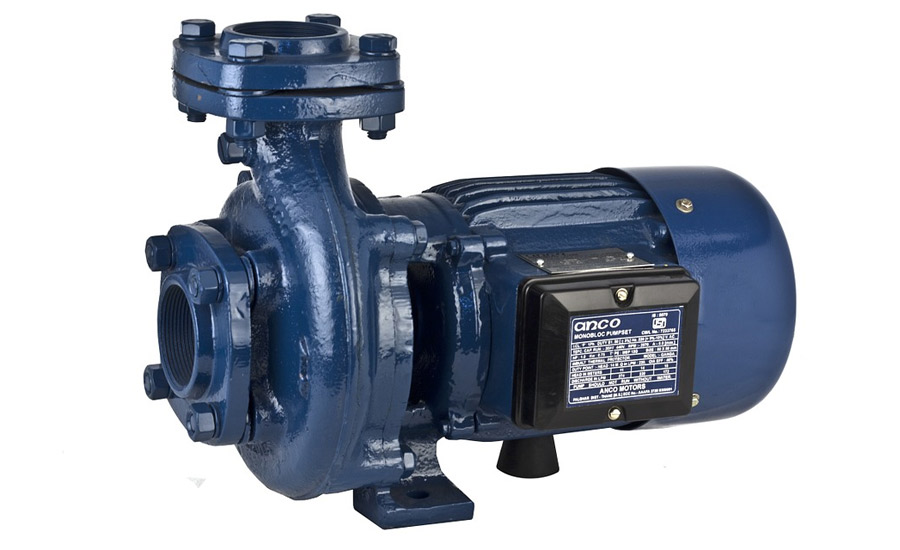
Various types of pumps are available to accomplish the pressure boost. End suction pumps are normally installed on smaller and low head installations. These pumps also offer an economical equipment package. Split-case pumps are utilized on most medium- to high-flow applications requiring low to medium heads. These pumps are heavy duty and offer extended product life. These units do require more space, however. Multistage centrifugal and turbine pumps are generally used for high head applications. The pumps’ multistage design affords high efficiency on low-, medium- and high-flow systems.
For extremely tall buildings such as the John Hancock Building in Chicago, water distribution is divided into pressure zones in order to meet high flow demands due to large heads. This allows for workable pressure throughout the entire building. If the system requires 250 psi to get water to the top of the building, this pressure cannot be transmitted to the fixtures on lower floors. Pressure zones are created by using pressure-reducing valves or having dedicated pump systems for each zone.
If a variable-speed system is not in the budget, then a way to save energy using constant-speed systems is to incorporate a low-flow shutdown tank. This tank would receive water volume from the pump system and store it. The control system could then turn the pumps off and allow the pressure to be maintained in the building by the tank. A bladder tank with a pre-charged air pressure provides reliable operation with no air dissolving into the water system.
Summary
We have discussed many of the factors that should be taken into account when designing a water pressure booster system. A great resource for future reference is the ASPE Plumbing Engineering Design Handbook-Volume 2, Chapter 5. Technology has certainly evolved since the 1800s, giving us many options and choices when choosing booster system equipment and controls.